· Andrei M. · B2B · 15 min read
B2B Product Catalogues: Create Custom Pricing for Wholesale Customers
Create dedicated wholesale catalogues with custom pricing, access credentials, and branding for each B2B customer. Scale from 5 to 500 accounts.
The way wholesale buyers purchase has fundamentally changed. B2B buyers now conduct the majority of their product research online before ever speaking to a sales representative, and a growing share of wholesale orders are placed entirely through self-serve digital channels. If your wholesale operation still routes every customer through a single public storefront with retail pricing — or through a PDF price list emailed on request — you are not just providing a poor experience. You are ceding ground to competitors who already deliver the personalized, account-specific catalog environment that B2B buyers have come to expect.
MicroPIM’s B2B Catalogues feature gives you the infrastructure to build that environment: dedicated product catalogs per wholesale customer, custom pricing rules applied independently for each account, and access credentials that control exactly what each buyer sees when they log in.
B2B E-commerce Is Exploding
The numbers are not a projection anymore — they are current reality. B2B e-commerce globally surpassed $18 trillion in 2023 and continues to outpace B2C growth. In Europe alone, cross-border B2B digital commerce has grown by double digits year-over-year for the past three years, driven by distributors and manufacturers who have invested in digital self-serve capabilities for their wholesale accounts.
More significant than the headline numbers is the behavioral shift they represent. Buyers at wholesale accounts now expect to log in, see their negotiated pricing, browse the products available to them under their contract terms, and place orders without involving a sales representative for routine purchases. Research from Forrester consistently shows that B2B buyers strongly prefer completing purchases without contacting a supplier when the process is straightforward.
The wholesale distributors and manufacturers gaining market share are not doing so by hiring more sales staff or expanding their call center hours. They are doing it by giving each wholesale account a catalog experience that reflects the commercial terms of that specific relationship — correct pricing, correct product access, correct branding — delivered through a digital channel that is available around the clock.
Why Wholesale Needs Custom Catalogues
The core challenge of wholesale e-commerce is that your commercial relationships are not uniform. A key account that has been buying from you for eight years has negotiated different pricing than an account you onboarded six months ago. A reseller operating in the industrial sector needs to see a different subset of your product range than a reseller focused on consumer goods. A customer in Germany may have access to products that are not available to customers in markets where you do not yet have distribution approval.
A single public storefront cannot model this reality. You either show everything at retail prices — which exposes your wholesale pricing to the market and removes all incentive for contract customers to log in — or you build separate storefronts for each customer segment, which creates a maintenance burden that scales poorly and produces inconsistent product data across channels.
The right architecture is a centralized product hub that pushes different product views and pricing to different customers, without maintaining separate data silos for each one. That is precisely what MicroPIM’s B2B Catalogues are designed to deliver.
Each B2B Catalogue in MicroPIM is a scoped view of your product catalog. It has its own product selection, its own pricing configuration, its own access credentials, and its own branding. The underlying product data lives once in MicroPIM — synchronized from your ERP or imported directly — and each catalogue draws from that single source of truth while applying the commercial rules specific to that account relationship.
MicroPIM B2B Catalogue Feature Overview
MicroPIM’s B2B Catalogues feature is purpose-built for wholesale catalog management. The core capabilities cover every stage of the customer-specific catalog lifecycle, from initial creation through ongoing management at scale.
From the B2B Catalogues section of your MicroPIM account, you can:
- Create unlimited catalogues — one per key account, one per customer tier, or one per market segment, depending on how your wholesale relationships are structured
- Curate products by brand or category — filter the product selection available in each catalogue so customers see only what is relevant to their agreement
- Configure custom pricing — apply a percentage discount against base prices, set fixed price overrides for specific products, or define volume discount thresholds per catalogue
- Assign access credentials — give each catalogue a unique username and password so only authorized buyers can access their account-specific pricing
- Add branding and descriptions — customize the catalogue with the customer’s account name, a description of the catalog scope, and branding elements that reinforce the business relationship
- Generate shareable URLs — produce a direct link to the catalogue that can be shared with buyers via email or embedded in account documentation
- Activate, deactivate, or delete catalogues — manage catalog status dynamically as accounts onboard, go dormant, or close
Creating Catalogues Per Business Customer
Setting up a new B2B Catalogue in MicroPIM starts with defining the product scope. Your full product catalog is the source — the catalogue is a curated view of that source, shaped by the commercial scope of the customer relationship.
You scope the product selection by brand, by category, or by a combination of both. A key account that distributes only your branded power tools product line gets a catalogue scoped to that brand, with no visibility into your other product families. A distributor covering the full product range gets a catalogue scoped to all categories, but with pricing rules specific to their volume agreement.
This approach gives you precise control over product visibility without creating duplicate product records. The product data — descriptions, images, technical specifications, stock levels — lives once in MicroPIM. The B2B Catalogue determines which slice of that catalog a given customer sees and at what price.
For accounts with very specific product needs, the brand and category filters can be combined. A customer who distributes only the premium sub-brand within your furniture category, for example, can have a catalogue scoped to that intersection specifically. The filtering model is flexible enough to match the product access terms of most wholesale agreements without requiring custom engineering.
As you add new products to MicroPIM that fall within the brand or category scope of an existing catalogue, they are automatically included in that catalogue. You do not need to manually add each new SKU to every relevant customer catalog — the scope definition does that work continuously.
Custom Pricing Per Catalogue
Pricing configuration is where B2B Catalogues deliver the most direct commercial value. Each catalogue in MicroPIM supports independent pricing rules that override the base product price for buyers accessing that specific catalog.
MicroPIM provides three pricing mechanisms at the catalogue level:
Percentage adjustment. Apply a discount across all products in the catalogue expressed as a percentage of the base price. A 15% discount catalogue automatically prices every product at 15% below the base price imported from your ERP or set in MicroPIM. When the base price changes — because costs changed, because the ERP pushed an updated price list — the discount recalculates against the new base automatically. Your wholesale pricing tiers stay accurate without a manual repricing exercise every time input costs shift.
Fixed price overrides. For specific products where the customer’s contract specifies a particular price rather than a percentage, you can set a fixed price override on individual items within the catalogue. The override takes precedence over both the base price and any catalogue-level percentage adjustment, giving you the flexibility to honor contract terms that do not follow a uniform discount structure.
Volume discounts. For accounts where pricing is quantity-dependent, MicroPIM’s catalogue pricing supports volume discount thresholds. You can configure pricing tiers within the catalogue so that unit prices decrease as order quantities increase, reflecting the bulk pricing structures typical of distributor agreements.
The combination of these three mechanisms covers the pricing structures used in the majority of wholesale commercial relationships. Most accounts will use a percentage adjustment as their baseline, with fixed overrides for hero products or loss-leader lines, and volume thresholds for customers whose purchasing behavior is highly quantity-sensitive.
For teams migrating from spreadsheet-based price list management, this represents a significant operational improvement. The price logic is configured once in the catalogue definition and maintained automatically as base prices change. The manual step of distributing updated price lists to each account — and hoping buyers are working from the current version — is eliminated. Shopify models the same idea natively through catalogs and price lists; what a catalog is in Shopify covers how percentage adjustments and volume breaks behave there, including the rules that decide which price a buyer actually sees when two catalogs overlap.
Access Credentials and Branding
Each B2B Catalogue can be secured with dedicated access credentials. You assign a username and password specific to that catalogue, and buyers who log in with those credentials see only the products and prices defined for their account.
This is more than a convenience feature. Access credentials are the mechanism that enforces the commercial terms of each wholesale relationship in a digital channel. A buyer from Account A cannot see Account B’s pricing. A reseller without authorization to distribute your premium product line cannot browse products outside their catalogue scope. The access control is enforced at the catalogue level, not through complex storefront logic that needs to be maintained separately.
Branding and description fields allow you to give each catalogue a context that reflects the business relationship. Adding the account name, a note about the catalogue scope, or information about the pricing terms in effect creates a more professional experience for the buyer — and makes it immediately clear when they log in that this catalog was prepared for their specific account.
The shareable URL feature lets you distribute catalogue access through whatever channel suits your account relationship. You can include the URL and credentials in a welcome email when onboarding a new wholesale account, add them to an account management document, or provide them through your sales CRM as part of the account handover process. There is no requirement for the buyer to register through a public portal — you control the access entirely from inside MicroPIM and share it directly.
Private URLs vs Shared Portals
MicroPIM’s B2B Catalogues support two distribution models depending on how you manage your wholesale account relationships.
Private catalogue URLs give each account a direct link to their specific catalogue, secured by the username and password you assign. The buyer bookmarks the link, uses their credentials to log in, and lands directly in their account-specific product view. This model works well for key accounts where the commercial relationship is managed by a dedicated account manager and the buyer contact is a known individual.
Shareable catalogue URLs without mandatory authentication are appropriate when you want to send a catalogue view to a prospect or to a buyer who does not yet have a formal account relationship. The URL provides access to the curated product selection and pricing defined for that catalogue without requiring a login, functioning more like a digital price list that you can send on request. Once the account relationship is formalized, you activate credential-based access to replace the open link.
The ability to activate and deactivate catalogues gives you operational control over access without deleting the catalogue configuration. When an account goes dormant — they stop purchasing, their business closes, or the commercial relationship ends — you deactivate the catalogue. The pricing rules and product scope are preserved for potential future reactivation, but the buyer’s access is suspended immediately. When a new contract season begins and pricing terms are renegotiated, you update the catalogue pricing rules and reactivate without rebuilding the catalogue from scratch.
Bulk Catalogue Updates
As your product catalog grows and pricing changes accumulate across ERP sync cycles, keeping catalogue configurations current becomes an operational concern. MicroPIM provides bulk update capabilities that reduce the per-catalogue maintenance overhead as your wholesale account base scales.
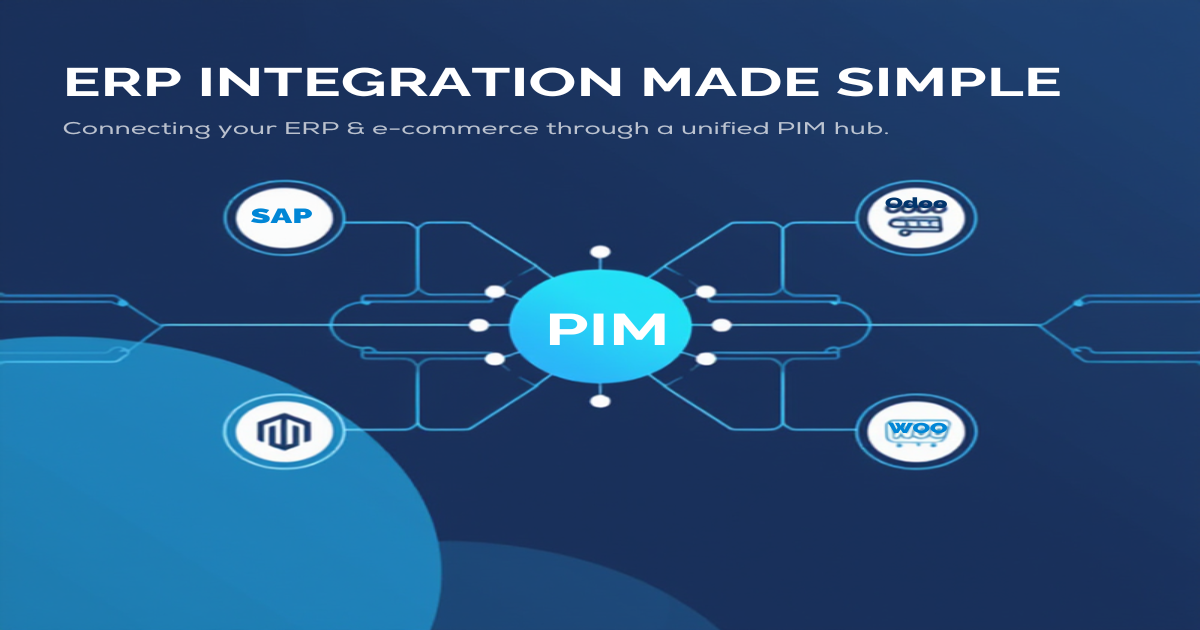
Base price changes that flow in from your ERP — through MicroPIM’s Dynamics 365, SAP Business One, NetSuite, or Odoo integrations — automatically recalculate against each catalogue’s pricing rules. You do not need to open each catalogue individually and reconfigure pricing after every ERP price list refresh. The percentage-based catalogue pricing model is specifically designed to absorb base price changes without manual intervention.
For cases where you need to update the product scope across multiple catalogues — adding a new brand to the product range that several key accounts have expressed interest in, or retiring a product category that is being discontinued — MicroPIM’s category-scoped catalogue definition means the change propagates automatically to all catalogues that include that brand or category in their scope. Add the new brand’s products to MicroPIM, assign them the correct brand classification, and every catalogue scoped to include that brand reflects the addition immediately.
When contract terms change at the beginning of a new trading period and discount rates need updating across multiple accounts, the percentage adjustment field in each catalogue is the single point of change. Updating the discount rate from 12% to 15% for a customer group takes seconds per catalogue and recalculates all product prices in that catalogue instantly.
This architecture — centralized product data with catalogue-level pricing rules applied as a layer on top — is what allows B2B catalogue management to scale without a proportional increase in administrative effort.
Monitoring Catalogue Usage and Performance
Understanding how wholesale buyers interact with their catalogues is an important part of managing B2B relationships effectively. MicroPIM provides visibility into catalogue activity that helps account managers identify engagement patterns and spot potential issues before they affect the commercial relationship.
At the catalogue level, you can see status indicators for each active catalogue — whether it is currently active, when it was last accessed, and the product count it contains. This gives account managers a fast overview of which customers are engaging with their digital catalog and which are not.
For wholesale operations where catalogue engagement is a leading indicator of order activity, the ability to see which accounts have active, accessed catalogues versus inactive or ignored ones helps prioritize outreach. An account that has not logged into their catalogue in 90 days may be purchasing from a competitor, or may simply not be aware that the digital channel is available to them. Either situation benefits from an account manager conversation, and the catalogue activity data provides the trigger for that conversation.
As MicroPIM develops its analytics capabilities further, catalogue performance data — including product view patterns and pricing engagement — will provide additional signals for B2B sales and account management teams.
Scaling B2B Operations from 5 to 500 Wholesale Customers
The architecture choices that make B2B Catalogues work for a small account base — centralized product data, catalogue-level pricing rules, credential-based access control — are the same choices that make the system viable at scale.
When you manage five wholesale accounts, the catalogue-per-customer model is a convenience. When you manage 50 accounts, it becomes a necessity for maintaining pricing accuracy and access control. When you manage 500 accounts, the alternative — maintaining separate data environments or manual price list distributions per account — is simply not operationally sustainable.
MicroPIM’s model scales because the underlying product data does not multiply with the number of catalogues. You maintain one product catalog, one set of product descriptions, one set of images. The catalogues are views and pricing layers on top of that data. Adding the 200th wholesale account catalogue does not require 200 times the data maintenance effort of the first.
The credential-based access model scales because each catalogue’s access is independent and self-contained. Onboarding a new wholesale account means creating a catalogue, configuring its product scope and pricing rules, generating credentials, and sharing the URL. The time required for that workflow does not increase meaningfully as your account base grows.
For distributors who are in the process of migrating from a manual or ERP-only order model to a digital wholesale channel, the B2B Catalogues feature provides a practical migration path. You can start with your five highest-value accounts, validate the catalogue experience and pricing configuration with real buyers, and then systematically onboard the rest of your account base using the same workflow. The investment in the initial setup pays forward to every subsequent account onboarding.
If you are running a Dynamics 365 environment, the B2B Catalogue feature connects directly to the pricing structures you already have in the ERP — you can read more about that integration in the Dynamics 365 wholesale guide. For teams building a broader multi-channel strategy alongside their B2B capabilities, the multi-channel e-commerce strategy guide covers channel architecture in detail. And if you are new to MicroPIM, the getting started guide walks through initial setup and product import. For operations with complex warehouse structures, the multi-warehouse inventory sync guide covers the inventory distribution model that sits alongside B2B catalogue management.
B2B e-commerce growth is not slowing down, and the wholesale accounts that generate your most significant revenue are being actively approached by competitors who already offer digital-first buying experiences. The expectation from B2B buyers is account-specific pricing, curated product access, and a professional catalog environment that reflects the terms of their commercial relationship — not a public storefront with a promotional banner.
MicroPIM’s B2B Catalogues give you the infrastructure to meet that expectation without building a bespoke portal for each customer or maintaining parallel data environments that diverge over time. Custom pricing, scoped product visibility, access credentials, and branded catalog presentation — configured once per account and maintained automatically as your product data and pricing evolve.
If you are ready to see how B2B Catalogues work with your product range and your specific wholesale account structure, book a demo and we will walk through the configuration using your own catalog data.